News & Updates
Stay informed on the latest developments in the fight against illegal online gambling syndicates, law enforcement actions, and international regulatory news.

The Downfall of Poker Media
How PokerGO, Card Player Magazine, and Triton grew so desperate for marketing dollars that they sold the entire poker industry's credibility to illegal online gambling operations like America's Card Room and Coin Poker.
All Articles
The Downfall of Poker Media
How PokerGO, Card Player Magazine, and Triton grew so desperate for marketing dollars that they sold the entire poker industry's credibility to illegal online gambling operations like America's Card Room and Coin Poker.
Read more
There was a time when poker media meant something. PokerGO, Card Player Magazine, and Triton were once the respectable faces of the game — the broadcasters, the journalists, the tournament backer that players trusted to tell the truth. Today, that bar has fallen so far it is barely visible. The reason is simple, and it is ugly: desperation for money. These outlets have become so starved for marketing dollars that they will take a check from almost anyone — including illegal online gambling operations like America's Card Room and Coin Poker. Rather than investigate or expose these criminal syndicates, the very media that should be holding the industry accountable has chosen to cash their checks and run their ads. It is sad, genuinely, that these once-respected poker media groups are so desperate for money that they will market literally anything. When the industry's loudest voices are paid by the very illegal operations they should be scrutinizing, the standard for the entire poker world drops. The bar does not just slip — it collapses. Take Coin Poker, one of the most absurd offenders currently being marketed as if it were a legitimate product. Coin Poker is not legal. The entire premise — gambling with a cryptocurrency coin instead of fiat currency — is no different than walking into an illegal physical casino, gambling with house chips, and then trying to tell the court: "We gambled using chips, not with the money." It is a transparent excuse, and it has never been a real defense. The chips turn into money. The coins turn into money. That is gambling, and it is illegal. Fourteen years ago, when crypto was still a novelty, maybe you could have tried to get away with what Tony G is doing. It would still have been illegal back then — but the world had not yet caught up, and the regulators had not yet woken up. Today is different. We now live in a world full of new regulations and a clear, acknowledged understanding of the real value of cryptocurrency. With that acknowledgment comes the end of the "it is just coins" excuse. It is absurd that anyone would still try this today — and it is even more absurd that major poker media outlets would help them market it. Then there is Coin Poker's so-called terms and conditions — quite possibly the biggest joke you will ever read on a poker website. They juggle accepting players from the United States and the European Union at the same time, both jurisdictions where they are clearly operating illegally, and then slap together a laughable legal disclaimer as if a paragraph of fine print will protect them in a courtroom. It will not. A terms page does not override federal and international law. This is the pink elephant era of poker — an era where laws in the United States and the European Union are broken openly, in plain sight, while the media cheers it on for a paycheck. It does not have to continue. If you want to understand the full scope of how these operators and their enablers operate, review our page on Accessories and Advocates of illegal gambling. It lays out exactly who is helping prop up this broken system — and why every player, journalist, and regulator should be paying attention.
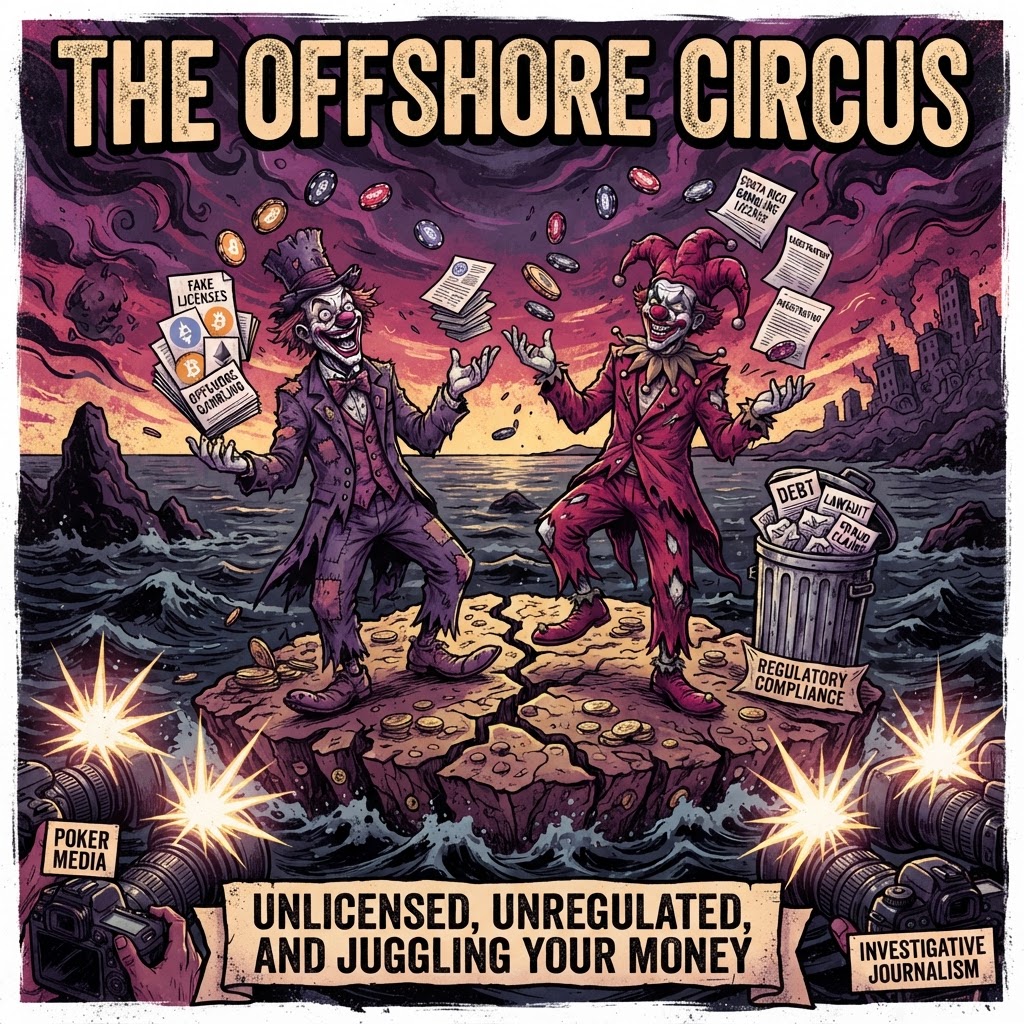
The Clowns of Online Gambling: Coin Poker and America's Card Room Hide Abroad, Break Laws, and Call It a Business
Coin Poker and America's Card Room are the clowns of the online gambling industry — breaking laws that would mean federal prison in the USA, hiding abroad behind back-alley licenses, and using poker media's desperation for revenue to market illegal activity. The chips-not-money defense doesn't work, and neither does the Silk Road defense.
Read more
If the online gambling industry had a clown car, Coin Poker and America's Card Room would be the two faces painted on the side of it. They have broken, and continue to break daily, laws that would put a man in federal prison if he were operating from inside the United States. The only reason they are not already in that cell is that they hide abroad. That is not a business strategy. It is not a reputation. It is the defining characteristic of a fugitive. Be men. Throw away the old bicycle, walk into a real licensing jurisdiction, and get a gaming license like every other respectable, honest company. The operators of ACR and Coin Poker know that path exists. They have chosen not to take it. By running from regulations, or by buying paperwork from back-alley islands that have never enforced a single gambling law against any of their own licensees, they are not operating a regulated gambling business. They are operating an illegal gambling operation. A piece of paper from a jurisdiction with no enforcement is not a license. It is a costume. When you offer gambling services to the USA and the EU from an unlicensed offshore base, you are playing with fire. El Mayo of the Sinaloa cartel went under the radar for a long time, and for a long time that looked like success. It was not success. It was a long criminal history that ended exactly where long criminal histories always end. ACR has gone under the radar in the same way, and now Coin Poker wants to follow the success of ACR — straight into the black market trash can of websites. There is no version of this story where Coin Poker turns out differently than ACR. There is only a version where it gets there faster, because the template is already built. At the real gaming conventions — the ones where the licensed operators, the real regulators, the compliance officers and the payment processors actually gather — nobody talks about these clowns. They are not peers. They are the scavengers, the bottom feeders who throw together some bullshit paperwork that does not justify illegal gambling, and who have used the desperation the various poker media outlets have for revenue as their channel into marketing literal illegal activities. Poker media is not a high revenue industry. It takes cash from about anybody. That is how illegal operations end up advertised on legitimate-looking pages. The advertising does not make the operation legal. It makes the outlet complicit. Here is the test that Coin Poker keeps failing. If an illegal casino opened in Manhattan and, when the raid came, said to the judge, "We're not illegal, your honor — our players gamble with chips, not money," that argument would not hold in court for a single minute. It would not hold because the chips are converted into money. The money is the point. The chip is a token. The gambling is the business. The same thing applies to Coin Poker. Calling your wagering instrument a "crypto chip" instead of a dollar does not change what the player is doing, what the house is doing, or what the business is. It changes the plumbing. It does not change the crime. Tony G — Antanas Guoga — has spent years making himself into the clown he portrays at the poker tables. That used to be a character. Now it is not a character anymore. He is the clown of online gambling. He runs an Anjouan-licensed operation marketing to American and British players while openly admitting that the same conduct, done from inside the United States, would send him to prison. He is not pretending it is legal. He is counting on distance. Distance is not a defense. It is an extradition question. Ever wonder why the bigshot pros — the Phil Iveys, the Daniel Negreanus, the players with the profiles and the bankrolls to actually launch a site — don't all just open gambling websites and accept players from the USA and the EU? It is because it is illegal. They know it. Their lawyers know it. The platforms that do it anyway know it. The reason the most famous names in poker do not run their own USA-facing gambling site is not that they lack the capital. It is that they do not want to go to federal prison. So do not look at what Tony G did and think, "I'm going to open a casino at home, and during the gambling I'll use chips instead of money, so I'm safe." You are not safe. You would go to jail. And do not think that doing the identical thing online, from a back-alley island, makes it any different. It makes it slower to prosecute. It does not make it legal. The Silk Road defense does not work here either. When the man behind the drug-dealing website Silk Road was caught, he did not walk free by standing in court and saying, "I thought it was okay — the law doesn't say 'don't sell illegal drugs online,' it only says 'don't sell illegal drugs.'" That argument was laughed out of the courtroom, and Ross Ulbricht went to prison for life. The same is true of illegal gambling. The statute does not say "don't run an illegal gambling website." It says don't run an illegal gambling business. A website is a business. A chip is a wager. An offshore address is a location. None of them are loopholes. They are all just words the defendant uses on the way to the sentence. This is the general concept the industry needs to absorb. Coin Poker and ACR are not innovators. They are not crypto pioneers. They are not gray-area operators. They are the clowns of the online gambling industry — companies that broke the law, keep breaking the law, and hide abroad instead of getting a license. The path to legitimacy is open, inexpensive relative to what they already make, and walked every day by honest operators. They will not walk it, because walking it means answering to a regulator, filing reports, paying taxes, and facing the same consequences every other licensed operator faces. They prefer the costume. The Poker Police exists to take the costume off.
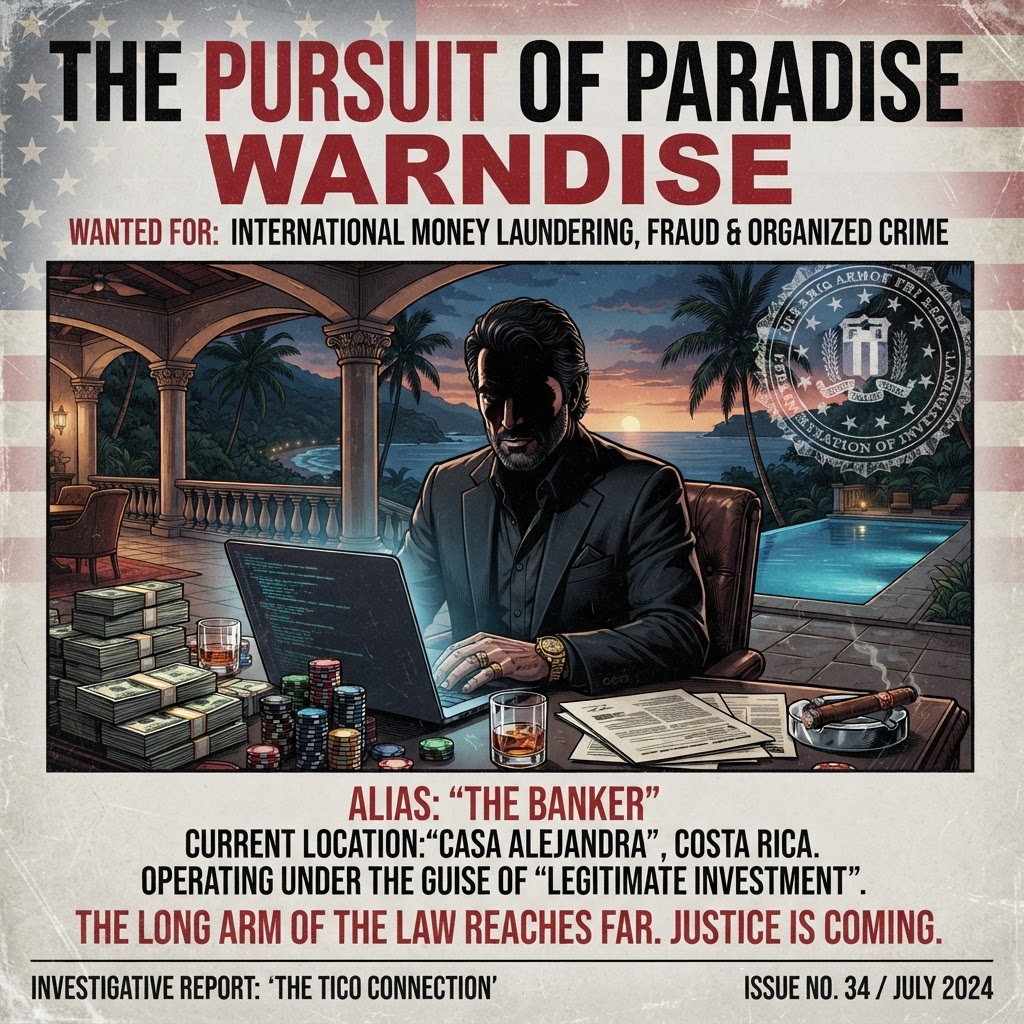
Public Enemy Number One: Phil Nagy, the Crime Boss of America's Card Room and the Largest Illegal Gambling Operator in the World
By revenue, the largest illegal gambling syndicate operator in the world — physical or digital — is Phil Nagy, the crime boss of America's Card Room. He crossed a line decades ago nobody would cross, built a fortune larger than any Mafia boss in American history, and brags about it. He is Public Enemy Number One, and the USA must start his extradition proceedings now.
Read more
Public Enemy Number One in illegal gambling is not a cartel boss. It is not a Mafia capo. It is not a shadowy figure operating in the dark. It is a man who sits openly in Costa Rica, advertises his operation on poker media, and brags about the length of time he has managed to stay out of prison. His name is Phil Nagy. He is the crime boss of America's Card Room, and by revenue he is the largest illegal gambling syndicate operator in the world — physical or digital. The magnitude of what Phil Nagy has built is without precedent in the history of American illegal gambling. He crossed a line decades ago that nobody else would cross, for a simple reason: people want to avoid going to prison. Nagy does not care. He hides out in Costa Rica and continues, year after year, to operate an unlicensed gambling business that openly targets players across the American states, the European Union, and the United Kingdom. He has drained billions of dollars out of the United States and into his illegal casino. It is crucial that the United States begin his arrest proceedings now. If a drug gang operates hidden outside America for 25 years, that doesn't grandfather them in, thus making it legal, and that also does not apply to Phil Nagy's long running illegal online gambling syndicates. He has broken so many laws it's hard to keep track, but we have as much as possible. He is part of why we don't include the names of The Poker Police article writers. We are trying to stop a multi-billion dollar criminal enterprise, which operates in the black area, trying to pretend they think it's gray. If someone in Manhattan sets up servers and launches a gambling website which offers services to the USA, they would be arrested and face a serious prison sentence, we have already seen this happen. We have extradition with Costa Rica. During the days when the USA was trying to get extradition in place for the Colombian cartels, it was difficult for justice, but we already have extradition with Costa Rica, so this has to get started as soon as possible. We have spoken to ex-employees who admitted that high stakes gambling had a lean against it, bot players and in-house players for the high stakes in the early days. None of that is relevant, though upsetting, it's to be expected with an illegal online gambling syndicate. America has been focused on terrorism for the last two decades, and that focus was justified — but the magnitude and audacity of what Phil Nagy has done does not disappear because it was not the priority. It simply makes for a longer criminal history. In ten years, when the majority of the online gambling industry is properly licensed, Phil Nagy will still be hiding in Costa Rica, still breaking gambling laws across the EU, the UK and the USA, unless he is brought to court first. He has even bragged about the length of time he has managed to stay away from prison — by advertising America's Card Room's 25th anniversary. A 25th anniversary of an unlicensed gambling operation openly marketing to American players is not a milestone. It is a confession, printed on a banner. It is an admission that the same federal crime has been committed, continuously, for a quarter of a century, with no arrest. Phil Nagy needs to be extradited to the United States for building a personal fortune estimated at between 500 million and over a billion dollars through the operation of an illegal gambling syndicate. Adjusted for inflation, that fortune dwarfs the personal income made by any single Mafia boss in American history through illegal gambling. Not one of the bosses of the five American Mafia families — not Genovese, not Gambino, not Lucchese, not Colombo, not Bonanno — ever built that kind of fortune through illegal gambling alone. That single fact tells you the magnitude of his criminal activity. The only difference between Phil Nagy and those bosses is that the Mafia did not also do money laundering for terrorist-designated terrorist organizations. America's Card Room has no such restraint, because it has no such oversight. A truly licensed organization — by the new Curaçao Authority, by the Isle of Man, by the UK Gambling Commission — must constantly be on the lookout for unusual activity. It must monitor transactions, file reports, refuse suspicious deposits, and answer to a regulator with the power to revoke its license. America's Card Room has no such care at all. There is no regulator. There is no reporting. There is no revocation. There is only a Costa Rican shell, a crypto on-ramp, and a man who has spent a quarter of a century converting American, British and European deposits into his own personal fortune. He brags about that fortune. He plays in million-dollar buy-in poker cash games and loses the very money he stole from hard-working Americans — money on which he has never paid a single dollar of tax in the process of accumulating it. A man who plays a million-dollar cash game with laundered proceeds is not a high-stakes poker player. He is a criminal publicly spending the proceeds of a federal felony, and doing so without consequence only because he stays on the far side of a border. The pink elephant era of illegal online gambling — the period in which the entire industry could see the obvious problem standing in the middle of the room and simply choose not to talk about it — can be defined by one name. That name is Phil Nagy. There is no active illegal gambling operation in the world, physical or digital, which has accumulated the revenue made by the world's largest illegal gambling syndicate, which is run by the crime boss Phil Nagy. The numbers are larger than any Mafia family's gambling operations. The duration is longer than any of them survived without indictment. The audacity is greater than any of them ever displayed, because no Mafia boss ever put his face on a 25th-anniversary advertisement for an illegal gambling operation. The Poker Police will not stop. We will push our marketing. We will spread the honest word. We will do everything necessary to see Phil Nagy in prison for running a multi-decade illegal gambling syndicate that has broken laws across the American states, the EU and the UK. We will not stop until justice is brought to this criminal. The head of the snake has been identified. The Enforcement Example already exists in the Feinman and King sentencings. The laws already exist. The only remaining question is whether the United States has the political will to file the extradition request against the single largest illegal gambling operator in the history of the country — and The Poker Police intends to make sure that question is answered yes.
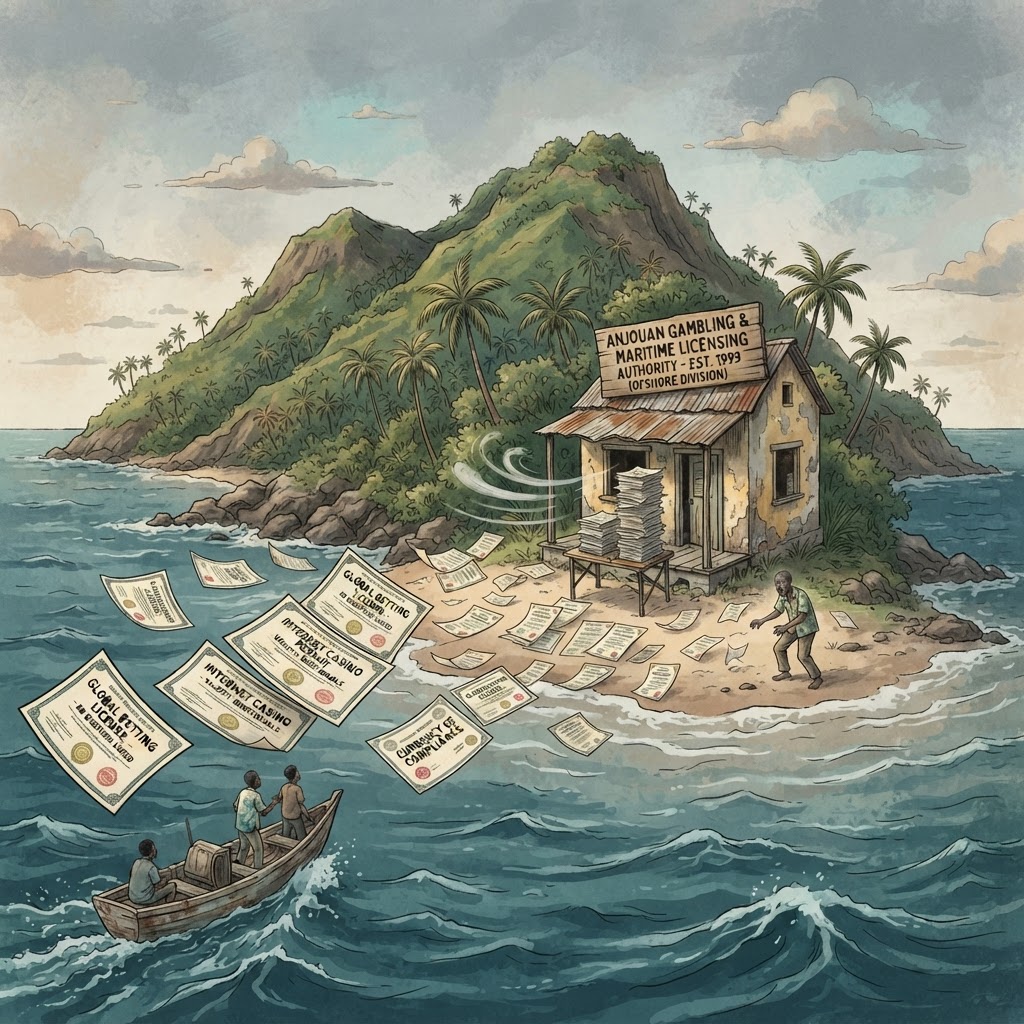
Anjouan: The Bottom of the Barrel of Online Gaming Licensing — And Why It's No Different Than Costa Rica or Panama
Anjouan is a tiny island off the coast of Africa with a 'license' the entire industry treats as a joke. They enforce nothing — not even their own laws. Every Anjouan-licensed site could run bots and outright administrative cheating and it would never be caught. Having an Anjouan license is like having ChatGPT print you out a medical degree.
Read more
Of all the licensing jurisdictions in the online gaming industry, Anjouan sits at the very bottom of the barrel. There is no serious operator, no serious regulator, and no serious player who does not already know this. The only people who pretend otherwise are the operators who buy the license and the poker media outlets who take their advertising money. Anjouan is a little island off the coast of Africa — one of the Comoros Islands in the Indian Ocean — with a population smaller than a single Las Vegas neighborhood. It has no meaningful gaming regulatory body, no enforcement staff of any consequence, no audit capacity, and no track record of ever pulling, sanctioning, or even investigating a licensee. To put your money on a website regulated by Anjouan is to trust a jurisdiction that has no power, no intention, and no capability of protecting you. They do not enforce anything — not the rules they claim to enforce, and not even their own laws. A website operating under an Anjouan license could be running bots against real players, could be engaging in outright administrative cheating, could be confiscating balances and refusing withdrawals, and there is no institution on that island with the resources or the mandate to catch it. The license is a document. It is not oversight. The difference between a Costa Rica-based illegal gambling syndicate and an Anjouan-licensed poker site is, in practical terms, zero. Both jurisdictions exist to provide a paper trail that looks like legitimacy while providing none of it. Having an Anjouan license is like having ChatGPT print you out a college degree in medicine. It is a piece of paper that confers no actual qualification, no oversight, and no accountability. It is a joke — and the entire gaming industry knows it. Regulators in Malta, the UK, Curacao (despite its own problems), and the Isle of Man have all, at various points, made clear in correspondence and in practice that Anjouan is not a comparable jurisdiction. It is a flag of convenience, and nothing more. Which brings us to people like Tony G — Antanas Guoga — who has made a career out of the bottom-of-the-barrel approach. Tony G runs Coin Poker on an Anjouan license while openly breaking the laws of the United Kingdom and the United States on a daily basis, fully aware of it. The marketing pitch is that Coin Poker is 'crypto-based,' that it uses chips instead of fiat, that it is therefore somehow different from a traditional sportsbook. We have addressed this nonsense before: telling a court 'we don't gamble with money, we gamble with chips' has never worked, and it will not work here. Coin Poker is an illegal online gambling syndicate targeting the USA and the UK from an offshore base, identical in substance to the Costa Rican operations we have spent years documenting. The fact that Coin Poker is marketed does not mean anything. Marketing is not legitimacy — far from it. Being featured in poker media does not make an operation legal, regulated, or safe. It means the operator paid for the placement. And poker media, as an industry, is not a high revenue business. They take cash from about anybody — which is plainly visible in who they promote. The same poker media outlets that market America's Card Room also market Coin Poker. Both are illegal online gambling syndicates. Both should be avoided by any player whose money matters to them at all. The Poker Police position on Anjouan-licensed operations is simple and final. Any site whose primary claim to legitimacy is an Anjouan license is, by definition, not a legitimate operation. There is no enforcement, no oversight, no recourse. A site like Coin Poker, run by a public figure like Tony G on an Anjouan license while openly marketing to American and British players, is operating in the same functional illegal space as every Costa Rica-based syndicate we have ever investigated. The license is theater. The law is the same law. The risk to the player is the same — in fact it is higher, because Anjouan provides even less protection than the already near-zero protection of a Costa Rican jurisdiction. If your money matters to you at all, stay away from America's Card Room, Coin Poker, and every other operation whose only shield is an Anjouan, Costa Rican, or Panamanian paper. There is no gray area. There is only a legal operation, regulated by a body that can actually protect you, and an illegal one, dressed up in a document from a little island off the coast of Africa that has never enforced a single rule against a single licensee.
The Enforcement Example: Costa Rica Betting Operation Lands California Man in Federal Prison — The Case for Extraditing Phil Nagy
A California man who ran an illegal online gambling and money laundering operation out of Costa Rica was just sentenced to 27 months in federal prison. The only reason Phil Nagy is not sitting in the same cell is that he has never returned to face the courts. The head of the snake in modern illegal gambling must be extradited.
Read more
On July 23, 2026, the Tico Times reported a sentence that should be read as a direct warning to every offshore gambling operator hiding in Costa Rica. A California man who ran an illegal gambling and money laundering operation out of Costa Rica has been sentenced to 27 months in federal prison. Jason Noah Feinman, 52, of Calabasas, received the sentence on June 9 in federal court in Los Angeles after pleading guilty in January to one count each of tax evasion, operating an illegal gambling business, and money laundering. A federal judge also ordered him to pay more than $1.3 million in restitution and a $150,000 fine, plus interest. According to the United States Department of Justice, Feinman operated a Costa Rica-based business that ran a website unlicensed bookmakers used to take wagers — including from bettors living in California — in violation of both state and federal law. The platform was a service layer for other operators rather than a consumer-facing sportsbook. Prosecutors say Feinman then laundered the cash the operation generated by converting it into checks made out to himself or his companies. Between May 18, 2018 and January 2, 2024, Feinman handed a single customer more than $1.5 million in cash and received 18 checks payable to him or his businesses for the equivalent amount. This is the Enforcement Example. Men like Phil Nagy, who have run multi-decade illegal online gambling operations out of Costa Rica, are genuine criminals under the law Feinman was just sentenced under. The only material difference between Feinman and Phil Nagy is that Feinman was physically within reach of a United States courthouse when the indictment came down. Phil Nagy has simply never placed himself in that position. He stays in Costa Rica. The conduct is the same. The crime is the same. The federal statute is the same. Operating an unlicensed gambling business taking wagers from American citizens is a felony regardless of whether the operator sits in a Calabasas office or a San José condo. The only thing shielding Phil Nagy from Feinman's fate is geography — and geography is not a defense, it is an extradition question. The comparison to drug enforcement is direct. A drug lord operating out of Colombia is not a person the United States considers beyond reach; he is a person the United States extradites. Pablo Escobar. El Chapo. The pattern is consistent: when the harm is large enough and the actor is identifiable, the legal mechanism used to reach them is extradition. The operators of Costa Rica-based illegal gambling syndicates are, in 2026, the digital equivalent of a Colombian cartel boss. They direct a criminal enterprise that takes in hundreds of millions a year from American citizens, they launder the proceeds, and they avoid U.S. jurisdiction by remaining on foreign soil. In every illegal organized crime situation, the head of the snake has to be recognized. The dismantle of the Mafia was not achieved by prosecuting foot soldiers; it was achieved by prosecuting the bosses. The same logic applies here. Feinman was a service-layer operator — a mid-tier actor — and he received 27 months plus $1.45 million in penalties. The boss of the largest illegal online gambling syndicate on earth, running a multi-decade operation openly targeting American players, is Phil Nagy, the head of America's Card Room. He is the head of this particular snake. The Tico Times reporting notes that Feinman's case is not an outlier. In October 2025, Christopher Scott King of Santa Monica was sentenced to 21 months after admitting he ran an unlicensed bookmaking operation from Los Angeles County using a Costa Rica-based sports betting website to take wagers from California bettors. King concealed $13.6 million in income from the IRS between 2019 and 2022 and laundered proceeds through real estate development and gold purchases. He was ordered to forfeit $10 million and pay $3.8 million in restitution. A year earlier, Matthew Bowyer of Orange County pleaded guilty to running a betting ring. The Department of Justice is, quietly and methodically, working its way up the ladder. These cases demonstrate two things at once. First, that the federal government already considers offshore, Costa Rica-based online gambling targeting Americans to be a prosecutable felony — not a gray area, not a legal ambiguity. Second, that the only thing standing between Phil Nagy and an identical set of charges is the refusal of the Costa Rican government to extradite him, and the failure of U.S. authorities to prioritize that extradition at the same level they have prioritized narco-traffickers. The Poker Police demands that priority be set. Phil Nagy has run America's Card Room as an unlicensed gambling operation openly marketing to American, British and European players for over a decade. Every dollar Feinman and King laundered is a fraction of what Nagy's operation moves in a single week. Every sentence handed down in a Los Angeles federal courthouse that does not reach the head of the largest illegal gambling syndicate in the world is an incomplete enforcement action. The Enforcement Example should be applied to its logical conclusion: recognize the head of the snake, file the extradition request, and bring Phil Nagy to a United States courthouse to face the same federal statutes Feinman and King just faced. The laws exist. The precedent now exists. What is required is the political will to use them against the most consequential criminal in this industry.
The Mafia's Costa Rican Playbook: How the Genovese, Gambino and Bonanno Families Built the Blueprint for Illegal Offshore Gambling
For decades, the Genovese, Gambino and Bonanno crime families have used Costa Rica and Panama to set up unregulated gambling operations targeting the USA, the UK and the EU — the same corrupt system modern syndicates like America's Card Room use today to evade decades of illegality and accumulate hundreds of billions in revenue.
Read more
Long before Phil Nagy set up shop in Costa Rica, the American Mafia was already writing the playbook. The Genovese, Gambino, and Bonanno crime families have, for decades, systematically used Costa Rica and Panama as offshore bases to set up unregulated and illegal gambling operations that openly offered their services to players across the USA, the United Kingdom, and the European Union. The model is not new. It is the same corrupt system that modern online gambling syndicates — including America's Card Room, Coin Poker, Bovada and Ignition — continue to use to this day to get away with years, and in some cases decades, of blatant illegality. The pattern is well-documented in organized crime history. Throughout the 1990s and 2000s, federal wiretap investigations into the New York Mafia families repeatedly surfaced evidence of Costa Rican call centers and Panama-registered websites processing wagers placed by American bettors.操作 These were never gray-area businesses — they were extensions of the same criminal enterprises running sports betting rings, loan sharking and racketeering back home. The offshore location was simply a shell to take advantage of the enforcement gap between the host country's willingness to look the other way and the U.S. government's difficulty in reaching operators abroad. The revenues generated by this alliance between Italian-American organized crime and corrupt Central American jurisdictions are staggering. Over the last decade alone, federal investigators and independent forensic accountants estimate that the cumulative revenue generated through Costa Rica- and Panama-based illegal gambling operations — including the successor platforms built on the Mafia's template — reaches into the hundreds of billions of dollars. That is hundreds of billions of dollars extracted from American, British and European citizens, routed through shell companies, laundered through crypto and money orders, and ultimately shielded from the very governments that should have been taxing it and prosecuting those who ran it. The critical detail that connects the historical Mafia cases to today's operators is the mechanism of impunity. The Genovese family did not place its gambling business in Costa Rica because Costa Rica legalized it. They placed it there because Costa Rica, like Panama, had neither the political will nor the institutional resources to enforce gambling and financial laws against foreign operators who kept a low profile and paid the right people. That regulatory vacuum — not legality — is what every illegal operator from the Gambino family's bookmakers to Phil Nagy's America's Card Room has exploited. Modern syndicates such as America's Card Room operate on exactly the same template. They are not licensed. They are not regulated. They are not permitted to offer gambling to the USA, the UK or the EU by any legitimate jurisdiction. They exist in a functional illegal space — a lawless zone created by the refusal of host nations to enforce their own statutes — not in any legal gray area. They repeat the same crime, year after year, protected only by the difficulty of crossing borders with a warrant. There is no legal difference between a Gambino-run sportsbook in Costa Rica in 1995 and a Phil Nagy-run poker site in Costa Rica today. The technology changed. The crime did not. The sole reason these operations persist is that governments have failed to treat the offshore operator with the same urgency they treated the Mafia capo who ran the identical business out of a social club in Queens. The Poker Police exists to end that failure. The Genovese, Gambino and Bonanno families were eventually dismantled through the sustained application of federal racketeering, wire fraud and money laundering prosecutions — using laws that already existed, applied to conduct that was always illegal. The same laws, applied to the same conduct, against the present generation of offshore operators, would produce the same outcome. What is required is not new legislation. It is the political will to extradite and prosecute the head of the snake — the Phil Nagys of the world — and to make clear to every operator currently hiding behind a Costa Rican or Panamanian shell that the era of impunity is over.
$673 Billion A Year: The True Cost Of America's Illegal Online Gambling Black Market
Illegal online gambling drains an estimated $673 billion a year from the United States — costing over $145 billion in lost tax revenue annually. At the center of it all stands one man: Phil Nagy, the 'El Chapo' of illegal online gambling.
Read more
An estimated $673 billion a year is spent on illegal gambling in the United States. That stagger-ing figure, drawn from the most comprehensive forensic analysis of the offshore gambling market to date, represents money that exits the legitimate American economy and vanishes into the coffers of unregulated, criminal enterprises. It also costs the United States over $145 billion in lost tax revenue yearly — revenue that would otherwise flow to schools, roads, and essential state expenses — as opposed to the same activity carried out by legal, licensed, tax-paying operations. The main thing to realize is this: with all forms of gambling, nothing is built. Especially with online gambling, society is not benefited in any way. The only benefit is the taxes. The only real benefit of gambling is that it is heavily taxed — and in many U.S. states those taxes pay for schools, roads, and other state expenses. Other than that, gambling is a form of entertainment which mathematically takes, and takes, and takes. Nothing is more of a menace on society than illegal online gambling. From the hundreds of billions taken out of the United States — with cartel ownership in many cases and cartel money laundering in all cases — these operations represent a direct transfer of American wealth into the hands of criminal networks, terrorist-designated cartels, and the corrupt offshore officials who protect them. Our mission remains the same. The 'El Chapo' of illegal online gambling is a multi-billionaire named Phil Nagy. His brazen illegality is so obscene that he needs to be arrested and extradited to the United States — that is the first step toward the end of illegal gambling syndicates. This one individual alone, Phil Nagy, makes more revenue a year than multiple Vegas casinos. His illegal gambling syndicate makes more money than all illegal mafia-related gambling operations in America combined — including all five New York Mafia families, the Russian Mafia, the Albanian Mafia, the Armenian Mafia, and South American Mafia groups operating in America. Phil Nagy is the King-Pin of illegal online gambling, and the head of the largest illegal gambling syndicate in the world. And yet the difference is — Phil Nagy is not in prison. He is free. He is free, running a multi-billion-dollar crime syndicate, laundering money for terrorist-designated cartels, breaking so many laws it is difficult to keep track of them all. His continued liberty, while presiding over an operation of this scale and criminality, is itself an indictment of the international enforcement gap that has allowed this industry to flourish for two decades. His imprisonment is the first step in the history of fighting organized crime and stopping terrorist-designated cartels. It is the single act that would signal to every operator, every affiliate, and every corrupt official that the era of impunity is over. Phil Nagy is at the level of historical criminals such as El Chapo and John Gotti. He belongs in that same tier of figure — and he belongs in that same tier of accountability. There have been reports of murders in Costa Rica linked to these multi-billion-dollar gambling syndicates. Politicians have been paid off to try to continue having the USA turn a blind eye. This era has to end — for our grandkids to have a clean, legitimate future.

Doyle Brunson: The Godfather of Poker and His Unmatched Legacy on the Game
From small-town Texas to the highest-stakes tables in Las Vegas, Doyle 'Texas Dolly' Brunson transformed poker from an underground card game into a global phenomenon. A look back at his extraordinary career, his landmark books, his ten WSOP bracelets, and his commanding presence on High Stakes Poker.
Read more
Doyle Frank Brunson. Born August 10, 1933, in the small town of Longworth, Texas. Died May 14, 2023, in Las Vegas, Nevada, at the age of 89. In the 89 years he walked this earth, Brunson did not just play poker — he defined it. He built it. He carried it on his back across decades when it was still an underground game played in back rooms by gamblers who risked more than their bankrolls. He was, without question, the greatest poker player who ever lived. And the evidence is not a matter of debate. --- EARLY LIFE & THE ROAD GAMBLER YEARS Brunson grew up in a West Texas where poker was illegal, dangerous, and played in rooms where violence was never more than a hand away. As a young man, he was a gifted athlete — a track star good enough to attract interest from the Minneapolis Lakers of the NBA. A devastating knee injury ended that dream and redirected the course of his life toward a card table. He briefly pursued a master's degree in administrative education, planning to become a school principal. But on his first day of work at a corporate job, he joined a poker game and won more than a month's salary in a single session. He never looked back. For years, Brunson traveled across Texas, Oklahoma, and Louisiana as a road gambler, playing in illegal games alongside Amarillo Slim and Sailor Roberts. These were not casual poker rooms — they were often controlled by organized crime figures, and violence was a genuine occupational hazard. Brunson survived all of it. He was robbed at gunpoint on multiple occasions. He watched men get shot at tables he had just left. He kept playing. He arrived in Las Vegas in the late 1960s, settled in, and the poker world was never the same again. --- THE WSOP YEARS: TEN BRACELETS AND TWO MAIN EVENT TITLES When the World Series of Poker was established at Binion's Horseshoe in 1970, Doyle Brunson was already one of the best players in the world. Over the next four-plus decades, he proved it repeatedly — winning ten gold bracelets, reaching 26 WSOP final tables, and cashing 37 times across a career that would have been remarkable at any single moment in its arc. But the defining achievement came back-to-back: in 1976 and again in 1977, Brunson won the WSOP Main Event — the most prestigious championship in poker. He remains one of only four players in history to win the Main Event more than once. The hand he made his final call with in both championships? The 10-2 offsuit. A hand so associated with him that it is now permanently enshrined in poker culture as 'The Brunson.' He was the first poker player in history to win $1 million in tournament earnings. He won WSOP events in four consecutive years — a feat matched by only two other players ever. He was inducted into the Poker Hall of Fame in 1988, one of the first players to receive that honor. His 10th bracelet, won in 2005 at the age of 71, placed him in a three-way tie with Johnny Chan and Phil Hellmuth for the all-time record at that moment — a record he held for years before Hellmuth eventually surpassed it. Brunson's response was characteristically gracious. He showed up to present Hellmuth with his 11th bracelet himself. --- PHOTO_1: https://media.base44.com/images/public/68a11df3ea5b74497f6099f7/e436892a8_Screenshot2026-06-26at20455AM.png | Impacting True Poker --- SUPER/SYSTEM: THE BOOK THAT CHANGED EVERYTHING In 1978, Brunson published a book that was so candid, so precise, and so strategically comprehensive that many of his peers told him he was making a mistake. He called it 'How I Made Over $1,000,000 Playing Poker' — later republished and known to the world as Super/System. The book was unlike anything published before it. It did not treat poker as a game of luck with a few tips around the edges. It treated poker as a discipline — a system of mathematical reasoning, psychological warfare, and strategic construction. Brunson wrote his own section on No-Limit Texas Hold'em and recruited legends including Chip Reese, Joey Hawthorne, David Sklansky, and Mike Caro to contribute sections on other games. The poker world was stunned. Brunson had effectively given away the strategic secrets that had made him and his contemporaries rich. But what he understood — and what history has confirmed — is that poker knowledge at that level does not diminish the value of the best players. It raises the floor of the entire game. Super/System is still in print. It has sold millions of copies. It is the foundational text of modern poker strategy, and virtually every serious player who came after 1978 has read it. David Sklansky, Mike Caro, Doyle's son Todd Brunson — generations of poker thinkers built on the foundation that Super/System laid. A follow-up, Super/System 2, was published in 2004 and updated the strategic canon for the era of Texas Hold'em's global explosion. It sold millions as well. The two books alone would be enough to cement Brunson's legacy. But he was still playing. --- HIGH STAKES POKER: TEXAS DOLLY AT THE TABLE PHOTO_3: https://storage.uploads.highrollpoker.com/admin/doyle-brunson-poker.webp | Doyle Brunson at the High Stakes Poker table — the Godfather commanding the felt alongside poker's elite When High Stakes Poker debuted on GSN in 2006, it introduced the world to something it had never seen before: real money, no-limit cash game poker played by the best players alive, on television, with full hole card exposure. The stakes were unlike anything that had been broadcast — $300/$600 blinds with a $200 ante, buy-ins starting at $100,000 and regularly going much higher. Doyle Brunson was there from Season 1. He appeared across 94 episodes of televised cash game poker, logging 195 hours at the table over multiple shows — High Stakes Poker, Poker After Dark, and others. His net documented winnings across televised cash games exceeded $677,000. But the number tells only part of the story. What Brunson brought to those tables was something no other player could provide: sixty years of accumulated presence. He had played for money in rooms where the stakes were not just financial. He had outlasted eras. He had won championships before most of his High Stakes Poker tablemates were born. And he played with the same calm, the same controlled aggression, and the same unreadable composure that had defined him since the road gambler years in Texas. The television era did not create Doyle Brunson's legend. It revealed it to an audience of millions who had not been there for the original chapters. --- THE LEGACY Doyle Brunson passed away on May 14, 2023. The outpouring from the poker world was immediate and global — from Phil Hellmuth and Daniel Negreanu to Phil Ivey, Jennifer Harman, and players across every generation of the game's history. He left behind ten WSOP bracelets. Two Main Event championships. The 10-2 hand that bears his name. The book that changed how the game is understood and taught. A World Poker Tour title. A Poker Hall of Fame induction. A son — Todd Brunson — who followed him into the Hall of Fame. And a legacy that extends beyond any single achievement: Doyle Brunson made poker legitimate. He made it serious. He made it a profession that brilliant minds could pursue with integrity. He carried the game from illegal back rooms in Texas to the most-watched poker tables on earth — and he did it with his cowboy hat on, his chip stack growing, and his presence commanding every room he entered. There will never be another Doyle Brunson. There will only be players who were shaped by the world he built. PHOTO_1: https://upload.wikimedia.org/wikipedia/commons/thumb/5/5a/Doyle_Brunson_2010.jpg/440px-Doyle_Brunson_2010.jpg | Doyle Brunson, 2010
The Poker Police Begins Mass Distribution of Research Packages to Governments, Regulators & Law Enforcement Worldwide
The Poker Police is now submitting comprehensive research packages — covering every documented illegal online gambling syndicate in detail — to every U.S. state, all relevant federal bodies, every EU member state, the UK, their respective regulatory agencies, and capital city local governments across all jurisdictions. Both digital and physical copies are being submitted, with ongoing updates to follow on responses, legislative developments, and criminal pursuits.
Read more
The Poker Police is now submitting the most comprehensive distribution campaign in our organization's history. Effective May 2026, we are submitting detailed research packages on each documented illegal online gambling syndicate — America's Card Room / Winning Poker Network, Bovada, Ignition, BetOnline, Sport Betting AG, Black Chip Poker, BetUS, MyBookie.ag, Bet Now, Coin Poker, Phenom Poker and other illegal online gambling syndicates — to governments, law enforcement agencies, regulatory bodies, and local authorities across the United States, the European Union, and the United Kingdom. The scope of submission is as follows: United States: • All 50 state governments and their respective attorneys general offices • All relevant federal bodies — including the Department of Justice, the FBI's Crime and Corruption in Sport and Gaming Program, the Financial Crimes Enforcement Network (FinCEN), the Drug Enforcement Administration, the Federal Trade Commission, the Internal Revenue Service Criminal Investigation Division, and relevant Congressional oversight committees • Capital cities and major metropolitan governments, so that local law enforcement and municipal leadership are fully briefed on the magnitude of what is happening in their communities European Union: • All 27 EU member state governments • The European Commission's relevant directorates and the European Parliament's organized crime and consumer protection committees • National gambling regulatory authorities across all EU member states • Capital city governments of all EU member states United Kingdom: • The UK Parliament and relevant select committees • The Gambling Commission, the National Crime Agency, the Financial Conduct Authority, and HM Revenue & Customs • The government of London and other major UK city authorities Both digital and physical copies are being submitted. We believe that physical documentation — delivered formally to government offices — carries a weight that a digital submission alone does not. What our packages contain: • Detailed organizational profiles on each illegal syndicate, including known operators, estimated illegal revenue by jurisdiction, and documented legal violations under U.S., EU, and UK law • Analysis of the money laundering infrastructure connecting these platforms to Mexican cartel operations • The legal framework establishing why each platform is unambiguously illegal in each jurisdiction • The Black Book registry of named operators and founders permanently disqualified from legitimate licensed gambling • Affiliate and marketing network documentation Terrorist designated cartels in Mexico and Colombia use Costa Rican and also Panamanian illegal online gambling syndicates for trickle money laundering approaches. That approach to money laundering is small amounts, in large volume. That means they use stolen information to make hundreds of accounts, each moving about $10,000 a day or $50,000 a week, adding up to tens of millions a week through different Costa Rican and Panamanian illegal online gambling syndicates. What comes next: The Poker Police will provide ongoing updates on responses received from governments, regulatory bodies, and law enforcement agencies. We will track and report on legislative developments — including any bills introduced to block access to these criminal platforms or impose penalties on payment processors that continue to service them. We will also report on the ongoing criminal pursuits of syndicate leadership, including extradition proceedings and federal indictments as they develop. This is not a one-time action. It is the beginning of a sustained, documented, and escalating campaign. The organizations are caught. Their operators are named. The governments of the world are being formally notified. We will not stop until every one of them faces justice.

The Poker Police Expands Outreach to Legislators in the USA, the UK and the EU
The Poker Police will be conducting direct outreach to state and federal legislators in the United States, members of the European Parliament, and regulatory bodies in the UK. Detailed research packages on each documented illegal online gambling syndicate have been prepared and will be delivered to key policy-making offices across multiple jurisdictions.
Read more
The Poker Police will formally commence its legislative outreach campaign, delivering detailed research packages on each documented illegal online gambling syndicate to law enforcement bodies, regulatory agencies, and elected officials across the United States, the European Union, and the United Kingdom. Our research packages will include individual dossiers on each syndicate — covering organizational structure, estimated illegal revenue, jurisdiction of operation, documented legal violations across U.S. federal and state law, EU member state law, and UK law, and the identities of known operators and founders. In the United States, packages will be submitted to relevant offices at the Department of Justice, the FBI's Crime and Corruption in Sport and Gaming Program, the Financial Crimes Enforcement Network (FinCEN), the Federal Trade Commission, and to the offices of state attorneys general and relevant congressional oversight committees. This follows the historic August 2025 letter signed by all 50 attorneys general urging DOJ action — our outreach is designed to provide the specific documented evidence those offices need to act. In the European Union, our materials will be directed to the European Commission's relevant directorates, national gambling regulatory authorities in all 27 member states, and the offices of MEPs with oversight of consumer protection and organized crime. This outreach is timed to coincide with the coordinated joint enforcement initiative launched by seven EU regulators in November 2025. In the United Kingdom, packages will be submitted to the Gambling Commission, the National Crime Agency, the Financial Conduct Authority, and relevant members of Parliament. The Poker Police will continue to provide updates on legislative and regulatory responses as they develop, including ongoing pursuits of criminal syndicate leadership and any legislation introduced to block access to these platforms.
Thousands of Player Accounts Frozen by Offshore Platforms — No Legal Recourse Available
Reports continue to surface of players losing access to funds held on unregulated Costa Rican gambling sites, with individual account freezes ranging from thousands to over $250,000. Without any regulatory oversight, players have zero legal recourse. The Poker Police urges all players to avoid these platforms entirely.
Read more
One of the most consistent and damaging patterns documented across illegal offshore gambling platforms is the freezing of player accounts — often with no warning, no explanation, and no avenue for appeal. The Poker Police has received hundreds of reports from players across the United States, the European Union, and the United Kingdom who have had accounts frozen on platforms including Bovada, Ignition Casino, and others within the same criminal networks. The amounts withheld range from $1,000 to well over $250,000 per individual account. The pattern is deliberate. These platforms are not regulated by any recognized gaming authority. There is no licensing body to file a complaint with. There is no government agency with jurisdiction to order a refund. There is no legal framework in which a player can recover funds from an operator based in Costa Rica or another offshore jurisdiction that has no formal recognition in the USA, EU, or UK. Bovada and Ignition Casino — both part of the same criminal network operating under Harp Media B.V. — have attracted the highest volume of frozen account reports. Multiple players have reported submitting withdrawal requests for large sums only to have their accounts suspended, often after a period of sustained winning activity. America's Card Room and Black Chip Poker have also had many players reporting accounts with large amount of money being frozen and funds withheld. Harp Media B.V. and The Winning Poker Network have both had thousands of reports of large amounts of funds being withheld, including many different reports of bot accounts. If it hasn't happened yet to you, know this, these organizations have operator friendly terms and conditions, which would never be allowed with legitimate online gambling corporations, and that gives them outright authority to do anything they want to. The terms & conditions don't even mean anything when you're dealing with illegal online gambling syndicates. It's like an illegal casino that's hidden in a warehouse in New York City having their own terms & conditions. It's laughable, and it's just part of this pink elephant era. It will end, and the crime bosses of these organizations will be arrested soon, as all large-scale criminality eventually leads to arrests, especially once it's on the agenda for the USA, the EU and the UK, which it is now. Until the extraditions happen, remember, when you are gambling on a black market illegal online gambling website, there is no real justice-based recourse for players. Legitimate, regulated gambling platforms are required by law to maintain segregated player funds, submit to independent audits, and comply with player protection requirements set by their licensing authority. Unregulated platforms have none of these obligations. When they decide to keep your money, they can — and there is nothing you can do about it. This is not a bug. It is a feature of operating illegally and without oversight. The Poker Police urges all players: if you have deposited money on any of the platforms documented on this site, withdraw it immediately. Do not deposit further. And do not be deceived by the appearance of legitimacy — these are criminal operations, and your funds are not safe.
Costa Rican Illegal Gambling Syndicates Used as Cartel Money Laundering Conduits
International law enforcement agencies are actively investigating the use of unregulated online gambling platforms as conduits for Mexican cartel money laundering. U.S. federal prosecutors have filed charges against multiple Costa Rican nationals connected to Sinaloa Cartel laundering operations, while a Costa Rican bank was probed in a separate $100M laundering case in 2025.
Read more
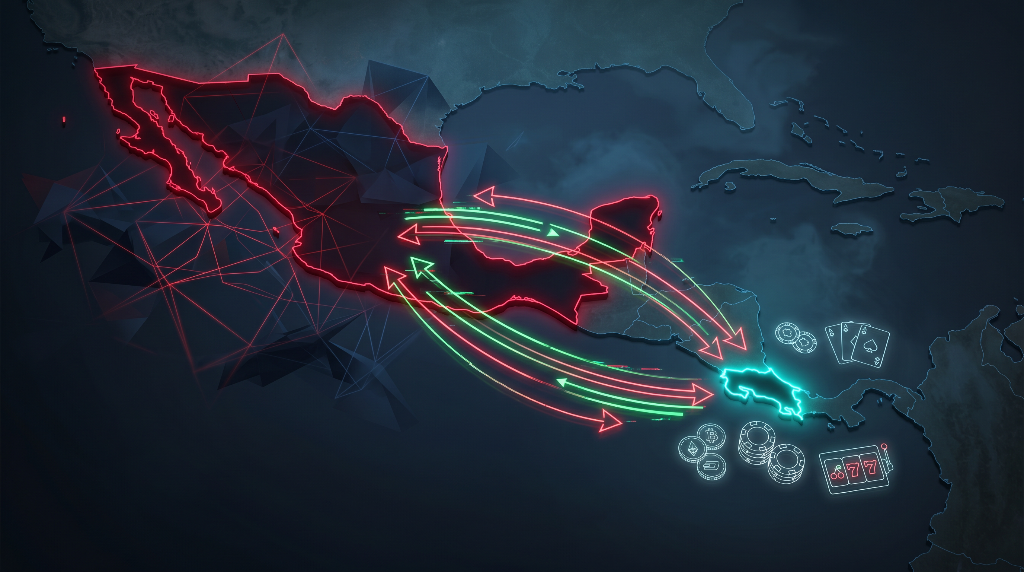
The link between illegal online gambling platforms and cartel money laundering is no longer a theory — it is being prosecuted in federal courts. But the mechanism that makes these platforms so useful to criminal organizations is not complicated. It comes down to one simple fact: cryptocurrency is traceable everywhere except inside an illegal online gambling syndicate. Blockchain transactions are public and permanently recorded. Every movement of cryptocurrency between wallets leaves a visible, timestamped trail on the ledger. Law enforcement agencies including the IRS Criminal Investigation Division, FinCEN, and equivalent bodies in the EU and UK have sophisticated forensic tools to follow cryptocurrency across wallets and exchanges. In isolation, cryptocurrency is actually one of the more traceable forms of value transfer — the entire history is public and immutable. The problem begins the moment cryptocurrency enters an illegal online gambling syndicate. These organizations operate with zero Anti-Money Laundering compliance. They do not comply with the AML frameworks mandated by the United States, the European Union, or the United Kingdom. They file no suspicious activity reports. They maintain no auditable records of who deposited what or where funds were withdrawn. There is no regulatory body they answer to, no government authority they cooperate with, and no international financial crime framework they participate in — at all. This means a criminal can deposit cryptocurrency into one of these platforms from Wallet A, and withdraw funds to a completely unrelated Wallet B — one with no prior on-chain connection to Wallet A, to their identity, or to the original criminal proceeds. Law enforcement traces the blockchain to the platform's deposit address — and stops. The trail dies at the platform's front door. There is no record inside the platform linking the deposit to the withdrawal, because these organizations deliberately maintain no such records. Withdrawals of $50,000 per week can flow through these platforms, through hundreds of accounts, often stolen identities, with no mechanism whatsoever to trace the money back to the original cryptocurrency account once it reaches the new destination wallet. This allows for tens of millions a week to move through a single illegal online gambling syndicate. Cartel financial operatives take this a step further by using the stolen identities of real individuals to create hundreds of accounts across a given illegal gambling platform. Each account moves money independently — depositing and withdrawing in smaller increments that individually attract less scrutiny, but collectively funnel tens of millions of dollars per week through the same criminal infrastructure. The victims whose identities are stolen have no knowledge their personal information is being used to open gambling accounts and process narcotics proceeds. Because these platforms perform no meaningful identity verification and answer to no regulatory authority, the stolen identity scheme operates without friction or detection. Adding a further layer of regulatory violation, these illegal online gambling syndicates openly accept transactions from Russia — in direct violation of sanctions and financial restrictions imposed by the United States, the European Union, and the United Kingdom. Accepting Russian financial flows is not a gray area. It is a deliberate, knowing breach of international sanctions law. Regulated gambling operators in any legitimate jurisdiction are expressly prohibited from processing transactions connected to sanctioned individuals, entities, or jurisdictions. These illegal platforms do it openly, with no consequences, because there is no regulatory body to enforce the prohibition against them. The platforms that operate without licensing — America's Card Room, Bovada, Ignition, BetOnline, Coin Poker, and others — have deliberately avoided the AML compliance frameworks that every legitimate, regulated gambling platform is required by law to implement. This is not an oversight. It is the business model. An illegal platform that refuses AML compliance, refuses to cooperate with any regulatory authority, and accepts transactions from sanctioned jurisdictions is not a gambling site that happens to be unlicensed — it is a financial crime infrastructure that happens to offer gambling as a front. Every player who deposits money on these unregulated platforms enters a financial ecosystem that has been directly connected to some of the most dangerous criminal organizations in the world. The crypto trail stops at their door. That is not an accident. That is the product they are selling.

Crypto-Based Gambling Sites: The New Front for Illegal Online Gambling
A growing wave of illegal gambling operators — most prominently Coin Poker and Phenom Poker — are attempting to use cryptocurrency as a legal shield, arguing that crypto transactions fall outside gambling laws. Legal experts across the U.S., EU, and UK unanimously reject this argument. The law follows the activity, not the currency.
Read more
Coin Poker and Phenom Poker represent the latest and most brazen attempt to evade gambling law enforcement by hiding illegal gambling operations behind cryptocurrency and obscure offshore licenses. The argument these operators deploy is simple: because players deposit and withdraw in cryptocurrency rather than traditional currency, gambling regulations do not apply. Legal experts across every relevant jurisdiction have consistently rejected this claim. The analogy is straightforward: when you walk into a casino, you exchange money for chips, gamble with those chips, and exchange them back for money when you leave. Coin Poker and Phenom Poker do the exact same thing — they just call the chips 'crypto.' There is zero legal difference. The activity is identical. The illegality is identical. Coin Poker, founded by Tony G (Antanas Guoga) and Michael Josem, holds a license from Anjouan — a small island territory widely regarded as the least credible gambling authority in the world. An Anjouan license requires minimal paperwork and negligible fees, offers no enforcement mechanism, and provides zero legal cover in the USA, EU, or UK. It is a piece of paper, not regulation. Phenom Poker, founded by Matt Valeo and based out of Panama, employs the same strategy. The Panama jurisdiction was deliberately chosen to avoid accountability, mirroring the playbook of every Costa Rican operator on this list. Both organizations ran marketing campaigns targeting players in the USA, EU, and UK — jurisdictions where their operations are explicitly illegal — and both recruited affiliate networks to expand their illegal market reach. Every marketer, streamer, or affiliate who promoted these platforms to restricted-jurisdiction audiences made themselves an advocate for an illegal gambling syndicate. The founders and operators of Coin Poker and Phenom Poker are now entered into The Poker Police Black Book — permanently disqualified from any position of trust in licensed physical or digital casinos in the USA, EU, or UK. The crypto shield argument has failed in courts before. It will fail again. These are illegal gambling operations. The currency is irrelevant.
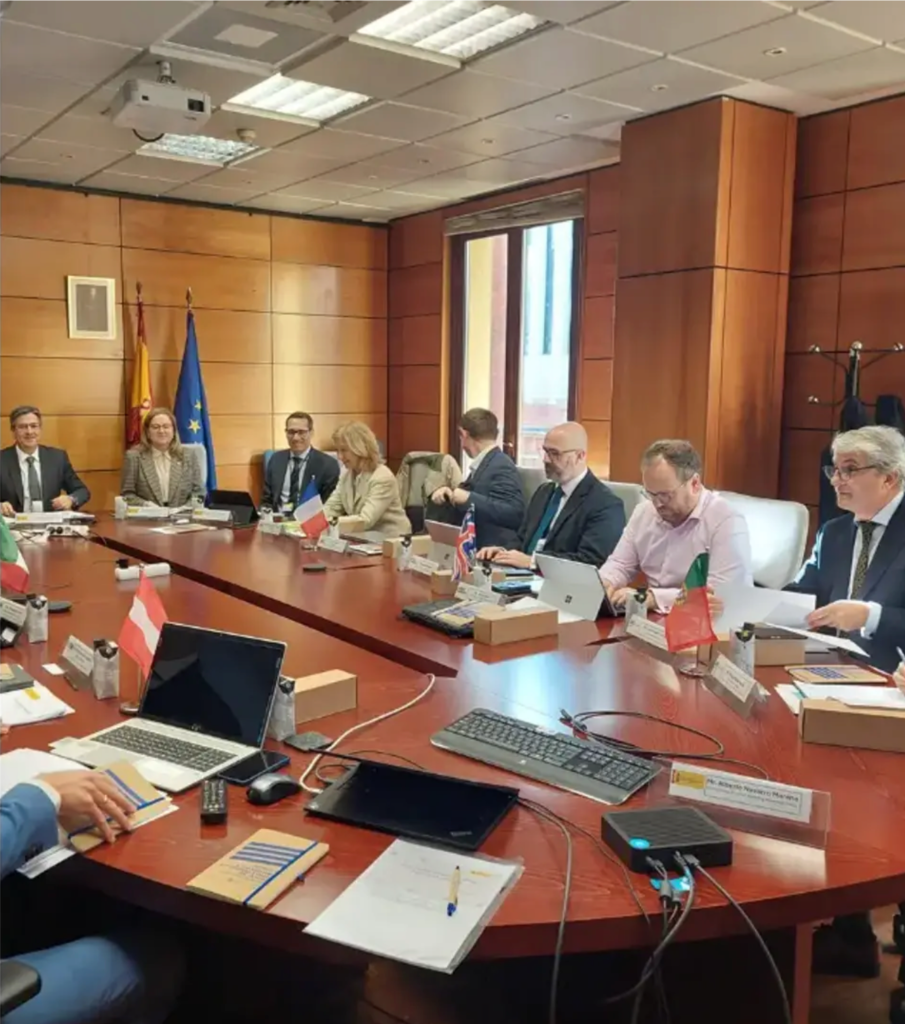
Seven EU Gambling Regulators Issue Historic Joint Statement Against Illegal Online Gambling
On November 25, 2025, gambling regulators from Austria, France, Germany, Great Britain, Italy, Portugal, and Spain issued a landmark joint statement committing to coordinated cross-border enforcement against illegal online gambling operators. The statement followed a Yield Security report revealing over 6,200 illegal operators actively targeting EU consumers and €80.6 billion in illegal gambling revenue in 2024.
Read more
On November 25, 2025, seven of Europe's most significant national gambling authorities took a landmark step — issuing a formal joint statement committing to expanded, coordinated action against illegal online gambling across the continent. The regulators involved were the gambling authorities of Austria, France, Germany, Great Britain, Italy, Portugal, and Spain — collectively representing the most important gambling markets in Europe. The joint statement directly followed the publication of Yield Security's comprehensive report on Illegal Gambling in the EU, commissioned by the European Casino Association. The report's findings established the full scale of the crisis: • Illegal online gambling operators generated approximately €80.6 billion in 2024 — representing approximately 71% of all online gambling revenue in the EU. • Targeting of EU consumers by illegal operators increased by 26% compared to 2023. • 92% of online gambling content viewed by EU citizens promoted illegal, unlicensed offers. • More than two-thirds of Europeans who interacted with online gambling in 2024 did so on unlicensed platforms. • Over 6,200 illegal gambling operators were identified as actively targeting EU consumers. • 81 million Europeans were exposed to or actively engaging with illegal gambling platforms. In their joint statement, the seven regulators committed to three concrete actions: 1. Strengthening information sharing on illegal gambling operators and emerging enforcement patterns across borders. 2. Calling on digital platforms, social media networks, and search engines to reinforce mechanisms preventing the dissemination of advertising for unlicensed gambling services. 3. Exchanging best practices on investigations and sanctions targeting unlawful operators and their facilitators — including affiliates, payment processors, and marketing partners. The statement represents a formal acknowledgment at the highest regulatory level that the illegal offshore gambling industry — which includes the Costa Rican and Panama-based syndicates documented on this site — has grown to a scale that cannot be addressed by individual national authorities acting alone. For the platforms documented by The Poker Police, including America's Card Room, Bovada, Ignition, BetOnline, Coin Poker, Phenom Poker, and other illegal online gambling syndicates, and their affiliated networks, this coordinated European response signals a new phase of enforcement risk. These platforms have operated with near-total impunity for two decades. The regulatory landscape is shifting decisively against them.
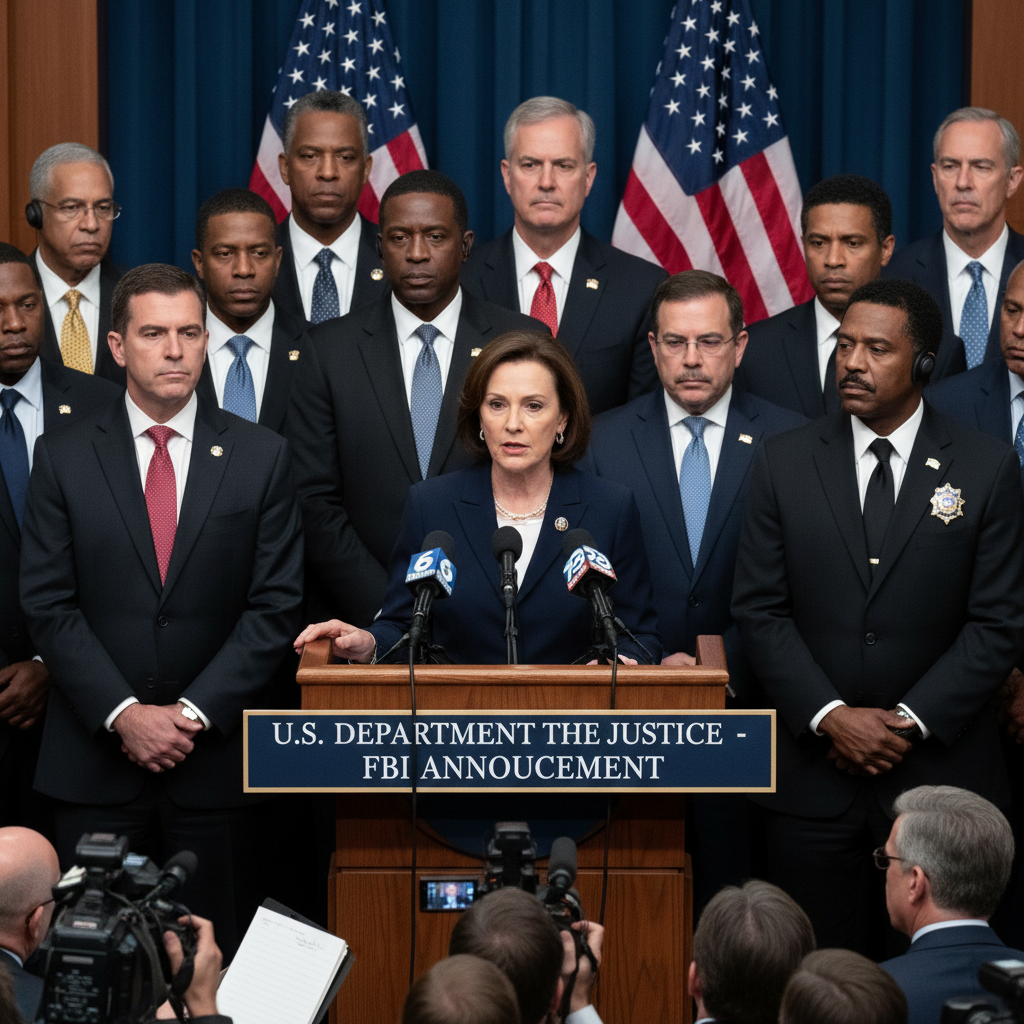
U.S. Federal Agencies & All 50 Attorneys General Escalate Pressure on Offshore Gambling Syndicates
In a historic bipartisan move, all 50 U.S. attorneys general signed a letter to the DOJ demanding a crackdown on illegal offshore gambling. The FBI issued a formal public service announcement warning Americans about the $673.6 billion illegal gambling market, and federal investigators are building comprehensive cases under the Wire Act and UIGEA against operators who have extracted billions from American players.
Read more
The pressure on illegal offshore gambling syndicates from U.S. law enforcement reached a historic milestone on August 5, 2025, when a bipartisan coalition of all 50 state attorneys general — plus the District of Columbia and U.S. territories — signed a formal letter to U.S. Attorney General Pam Bondi urging the Department of Justice to take decisive action against illegal offshore gambling operations. The letter, co-sponsored by the attorneys general of Connecticut, Massachusetts, Nebraska, and Utah, outlined the full scope of harm: illegal online gaming may exceed $400 billion in annual volume in the United States alone, resulting in more than $4 billion in lost tax revenue for states annually. The coalition called for the DOJ to pursue injunctive relief under UIGEA to block access to illegal websites, seize assets including servers, domains, and financial proceeds, and collaborate with state authorities, financial institutions, and payment processors to dismantle the financial infrastructure supporting illegal gambling. On December 17, 2025, the FBI issued a formal public service announcement titled 'Great Odds, High Risk,' warning U.S. bettors about the dangers of illegal sportsbooks and offshore gaming sites. According to data from the American Gaming Association as of August 2025, Americans wager an estimated $673.6 billion annually in illegal and unregulated markets — encompassing sports betting, online games, and unregulated machines. The FBI's statement confirmed that its Crime and Corruption in Sport and Gaming Program actively investigates organized crime groups who operate illegal sportsbooks, including offshore platforms targeting U.S. consumers. The Bureau noted that these platforms fund drug trafficking, human trafficking, and weapons trafficking — and that bettors risk extortion and violence if unable to repay debts incurred on illegal platforms. Federal investigators are building comprehensive cases under the Interstate Wire Act, the Unlawful Internet Gambling Enforcement Act (UIGEA), and the Illegal Gambling Business Act (IGBA) against operators who have extracted billions from American players without oversight, without taxation, and without any consumer protection obligations. For America's Card Room, Bovada, Ignition, BetOnline, and the other criminal syndicates documented on this site, the window of impunity is closing.
The Poker Police continuously monitors illegal online gambling activity worldwide. Check back regularly for new updates, investigations, and law enforcement developments.